3-Aminopropyltriethoxysilane (APTES): How It Improves Adhesion in Epoxy, Coatings and Composites
When a coating peels from metal, an adhesive fails at the interface, or a composite loses strength around its filler, the problem is not always the polymer itself. In many cases, the weak point is the boundary between an organic material and an inorganic surface.
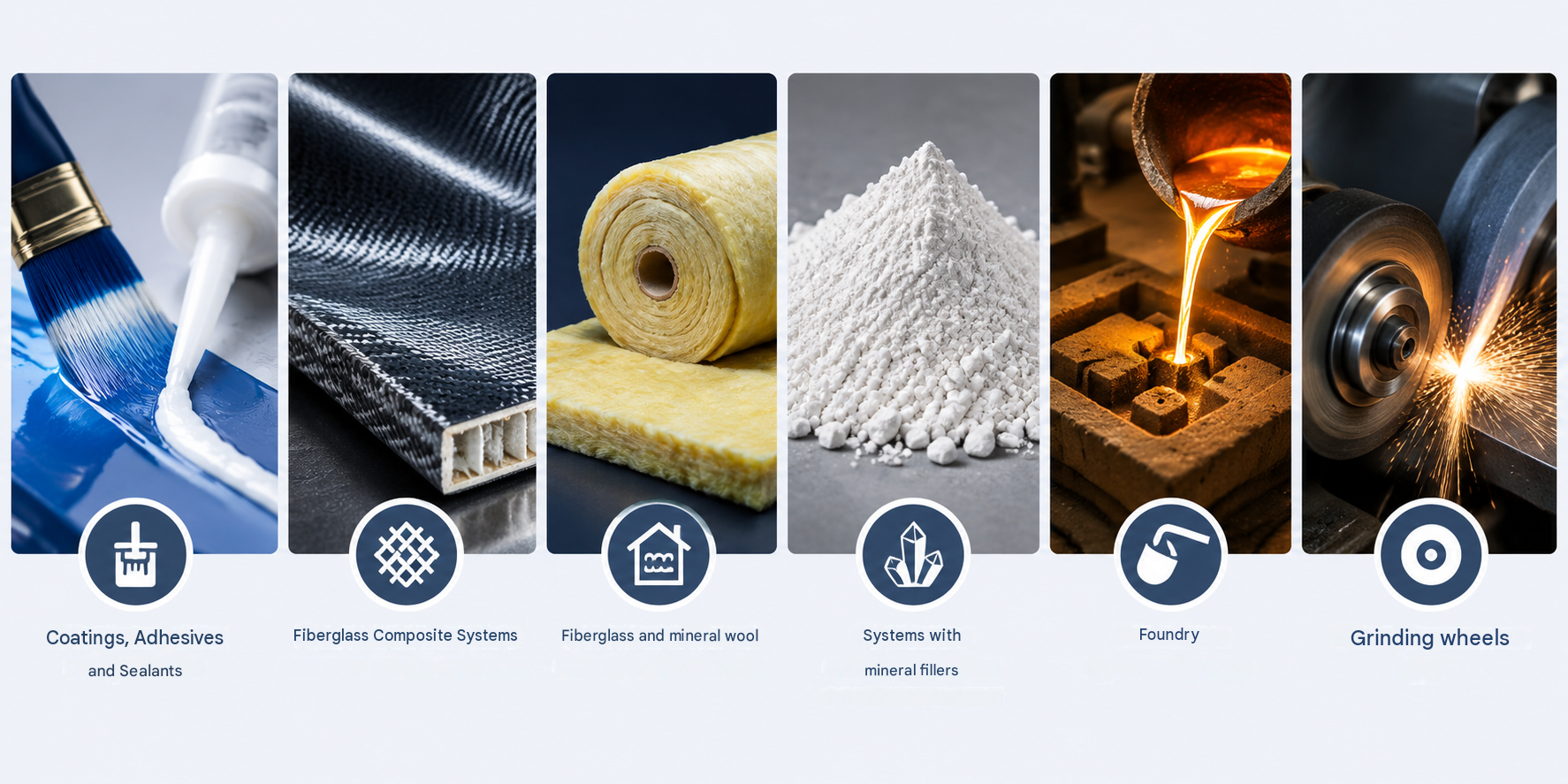
This is where 3-Aminopropyltriethoxysilane (APTES) becomes useful. Also known as an amino silane coupling agent, APTES is designed to improve the interaction between materials that normally have very different surface chemistry. Its applications cover epoxy resins, adhesives, coatings, silica, mineral fillers, glass fibers and other composite systems.
For formulators working with APTES epoxy resin systems, APTES silica treatment, or APTES adhesion promoter applications, understanding how the molecule works is more useful than simply knowing that it is a “coupling agent.”
What Is 3-Aminopropyltriethoxysilane (APTES)?
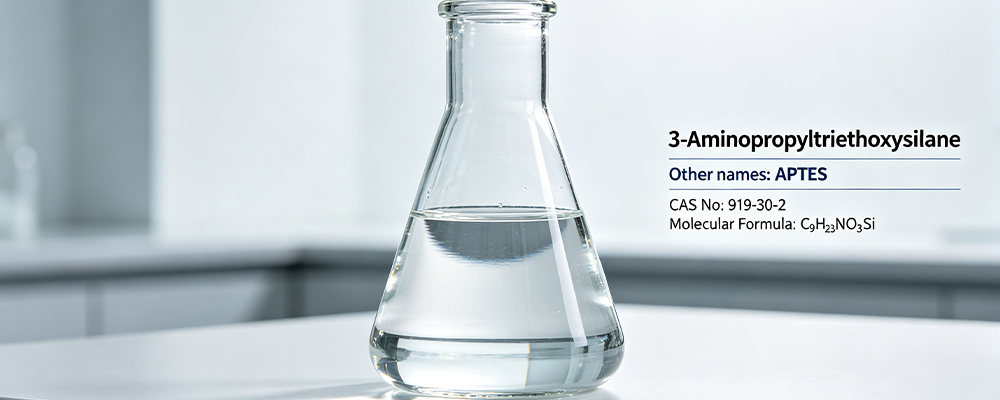
3-Aminopropyltriethoxysilane, CAS No. 919-30-2, contains two functional parts that play different roles.
The ethoxysilane side can react with suitable hydroxyl-containing inorganic surfaces after hydrolysis. This makes APTES useful for surfaces such as silica, glass, mineral fillers and metal oxide layers.
The amino group on the other end can interact with organic polymers and resins, particularly systems such as epoxy and certain polyurethane or other reactive resin formulations.
In simple terms, APTES helps create a chemical connection between the inorganic surface and the organic polymer.
That connection can be important when a formulation contains a large amount of filler or when an adhesive or coating needs to remain firmly attached to a glass or metal substrate.
Why Is APTES Used in Epoxy Resin?
Epoxy systems are one of the most familiar applications for APTES.
An epoxy formulation may contain inorganic fillers such as silica, alumina, calcium carbonate or other mineral materials. Without suitable surface treatment, the filler and resin may not interact efficiently. The result can be poor dispersion, weaker interfaces or inconsistent mechanical performance.
APTES can be used to modify the surface of suitable inorganic materials before they are incorporated into an epoxy system.
For example, when APTES-treated silica is added to an epoxy formulation, the treated filler surface can interact more effectively with the surrounding resin. This can help improve filler dispersion and strengthen the interface between the filler and polymer.
APTES can also be considered when improving adhesion between epoxy coatings and inorganic substrates. The exact result depends on the epoxy chemistry, substrate condition, treatment method and processing conditions, so application-specific evaluation remains important.
APTES for Silica and Mineral Fillers
Surface modification is another practical area where APTES is frequently considered.
Silica and mineral fillers have surface characteristics that differ considerably from organic polymers. Simply increasing the filler loading does not guarantee better performance. If the interface between filler and polymer is weak, the additional filler may not deliver the expected mechanical or functional benefits.
APTES provides a way to modify the surface chemistry of suitable fillers.
In practical applications, the important questions are not simply “Can APTES treat silica?” but:
What type of silica or mineral filler is being used?
How much surface moisture is present?
Is the treatment performed in water, alcohol or another medium?
Is the treated material used immediately or dried and stored?
How will the modified filler interact with the selected resin?
These factors can significantly influence the final performance.
For customers developing APTES silica treatment processes, EastChem can provide product documentation such as COA and technical data, together with technical communication around surface treatment and formulation conditions.
APTES in Adhesives and Sealants
Adhesives and sealants often have to bond materials with very different properties. A typical system may need to connect a polymer adhesive to glass, aluminum, steel, mineral fillers or other inorganic surfaces.
APTES can function as an adhesion promoter in these systems.
The value of APTES is particularly clear at the interface. Instead of relying only on physical contact between adhesive and substrate, silane treatment can introduce chemical interactions that help improve the connection between the two materials.
This makes APTES relevant to epoxy adhesives, certain polyurethane systems, sealants and formulations containing inorganic fillers.
However, the best APTES treatment is not necessarily the one with the highest dosage. Surface cleanliness, hydrolysis conditions, treatment concentration, drying conditions and compatibility with the adhesive system all need to be considered together.
APTES in Coatings: What Does It Actually Do?
In coating applications, adhesion is often tested under conditions that are much more demanding than simple initial bonding.
A coating may be exposed to moisture, temperature changes, salt, chemicals and mechanical stress. If the coating-substrate interface is weak, failure can begin underneath the apparently intact coating.
APTES can be used in surface-treatment strategies to improve the interaction between inorganic substrates and organic coating systems.
A Published Research Example
A published study investigated mixtures of aminopropyltriethoxysilane (APS/APTES) and tetraethyl orthosilicate (TEOS) for treating mild steel before applying an epoxy coating. Different silane ratios were evaluated using adhesion and corrosion-resistance tests.
Among the formulations studied, a 70/30 TEOS/APS ratio produced a more continuous and compact film. The treated steel showed improved epoxy coating adhesion and better corrosion protection compared with untreated conditions. Pull-off adhesion and salt-spray testing were used to evaluate performance.
The study is a useful example of an important point: the effectiveness of APTES does not depend only on the chemical itself. The treatment formulation and process conditions can strongly influence the final coating performance.
APTES for Glass Fiber and Composites
Glass fiber is another area where silane coupling agents are important.
In a fiber-reinforced composite, the polymer matrix and glass fiber do not naturally behave as one material. The interface between them has a major influence on how stress is transferred through the composite.
APTES can be used for suitable glass and inorganic fiber surface-treatment systems. By improving interaction between the inorganic fiber surface and the organic matrix, the coupling agent can contribute to better interfacial bonding.
This is particularly relevant when developing epoxy-based composites or other polymer systems where fiber–matrix adhesion affects the final mechanical properties.
What Should You Consider When Using APTES?
APTES is not a universal additive that can simply be added to every formulation at the same level.
Before application, it is useful to evaluate:
Substrate: Glass, silica, metal oxide and mineral surfaces may require different treatment approaches.
Resin chemistry: Epoxy, polyurethane and other polymer systems interact differently with amino-functional silanes.
Moisture: Hydrolysis of the ethoxy groups is an important part of silane chemistry, so water content and processing conditions matter.
Treatment method: Direct addition, substrate pretreatment and filler modification can produce different results.
Final application: Adhesion, dispersion, mechanical strength, moisture resistance and durability may require different optimization priorities.
For this reason, APTES selection should be connected to the actual formulation rather than considered separately from the application.
How EastChem Supports APTES Application Development
For customers evaluating 3-Aminopropyltriethoxysilane (APTES) for a new formulation or an existing process, technical information is often just as important as the product itself.
EastChem can provide COA, technical data and specification information, together with application-oriented technical communication covering epoxy resin, silica treatment, adhesives, coatings and composite materials.
If the application involves a specific resin, filler or substrate, the technical team can help organize the key parameters that should be evaluated, such as surface treatment conditions, compatibility and formulation requirements.
For international customers, supporting documentation can also be prepared according to the requirements of the intended application and market.
The goal is simple: help you understand where APTES fits into your formulation and what should be tested before moving to a larger-scale process.
Conclusion
3-Aminopropyltriethoxysilane (APTES) is more than a conventional additive. Its main value comes from addressing one of the most common problems in composite materials, coatings and adhesives: the weak interaction between organic polymers and inorganic surfaces.
From APTES epoxy resin systems and APTES silica treatment to adhesives, coatings and glass-fiber composites, its application is closely connected to surface chemistry and processing conditions.
For formulators, the key is not simply adding APTES, but understanding the substrate, resin, treatment method and final performance target. With the right evaluation, APTES can become a practical tool for improving adhesion and strengthening material interfaces.