Magnesium Phosphate Cement (MPC) for Construction: Fast Concrete Repair
In construction, not every concrete problem can wait for a conventional curing cycle.
A damaged floor in a factory, a deteriorated concrete section in a commercial building, a joint that needs filling before the next construction stage, or a local repair that must be completed during a short maintenance window can all create the same problem: the material needs to work within the construction schedule.
This is one reason Magnesium Phosphate Cement (MPC) is receiving growing attention from contractors, building-material manufacturers and construction-material distributors.
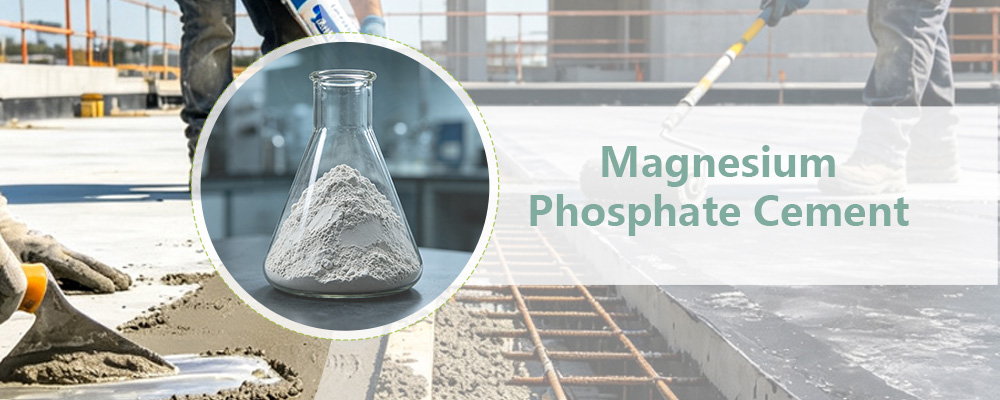
Rather than positioning MPC only as an emergency infrastructure material, the construction industry is increasingly interested in how MPC products / Magnesium phosphate cement products can be incorporated into practical repair, filling and specialty building-material systems.
For buyers looking for construction grade Mpc from China, the questions are therefore moving beyond basic product specifications. They are also asking about samples, formulation support, supply stability, delivery time and whether the supplier can support the project after the first order.
Where Magnesium Phosphate Cement Fits into Construction
The value of MPC in construction is closely related to the condition of the existing structure and the time available for the work.
For new building construction, conventional cement systems remain widely used. MPC becomes more interesting when a project involves repair, restoration, local reinforcement or fast completion of a specific construction step.
Potential construction applications include:
Concrete surface repair
Industrial and commercial floor maintenance
Localized structural repair
Joint and Gap filling
Repair of damaged concrete edges and sections
Grouting-related applications
Precast concrete repair
Specialty Building materials
Repair mortar formulations
Selected construction chemical systems
Why Construction Buyers Look Beyond Ordinary Cement
Construction materials are rarely evaluated by one property alone.
A repair material may have excellent compressive strength, but if it becomes unworkable before workers finish placement, it may not be suitable for the project.
The same applies to MPC.
For construction applications, buyers and formulators usually need to consider:
Working time
Setting behavior
Early strength
Bonding with existing concrete
Shrinkage and dimensional stability
Surface condition
Repair thickness
Aggregate selection
Ambient temperature
Mixing method
Final application requirements
This makes Magnesium Phosphate Cement (MPC) more than simply a “fast cement.”
The formulation has to match the construction method.
Research published in Construction and Building Materials has shown that factors such as the magnesium-to-phosphate ratio and sand-to-binder ratio can significantly affect setting and mechanical properties. The study also found that MPC mortar showed strong bonding to conventional concrete substrates and lower drying shrinkage than ordinary Portland cement mortar.
MPC for Concrete Repair and Gap Filling
One area attracting practical interest is localized concrete repair.
Consider a warehouse floor with damaged corners, a production building with worn concrete around equipment foundations, or a commercial building where damaged sections need to be restored before further work can continue.
In these situations, the repair area may be relatively small, but the construction delay can still affect the entire project schedule.
A properly designed MPC products system can be considered for:
Concrete patching
Damaged or deteriorated sections can be removed and replaced with an MPC-based repair material.
Gap filling
For selected construction gaps and voids, MPC-based formulations can be developed with suitable aggregate and workability characteristics.
Floor repair
Industrial and commercial floors may require localized repair where the repaired area needs to regain useful strength without waiting for a long conventional curing period.
Precast component repair
Minor defects or damage on precast concrete components may require a repair material that can bond effectively to the existing substrate.
The exact formulation should always be selected according to the application rather than treating one MPC grade as a universal construction material.
A Practical Construction Case: Faster Concrete Repair
A building-material contractor was working on the renovation of an industrial facility where several damaged concrete areas needed to be repaired before the next construction stage could begin.
The main concern was time. A conventional repair material would have required a longer curing period, which could have delayed the following work.
The contractor therefore evaluated a Magnesium Phosphate Cement (MPC)based repair mortar for the damaged sections. After surface preparation, the MPC mortar was mixed with selected aggregates and placed directly into the repair areas.
The material developed strength quickly and provided good adhesion to the existing concrete. The repaired sections reached the required early strength within the planned working schedule, allowing the contractor to continue with the next stage of construction without an extended waiting period.
For the contractor, the biggest advantage was not simply the strength value. It was being able to complete the repair and keep the construction schedule moving.
MPC Is a Material System, Not Just a Cement Powder
For construction-material manufacturers, purchasing an MPC binder is only the beginning.
The final product may contain cementitious components, aggregates, retarders and other functional materials depending on the intended application.
For example, a dry-mix manufacturer may need to optimize:
MPC + aggregate + functional additives → repair mortar
while another manufacturer may be developing a different formulation for filling, patching or specialty construction use.
In some dry-mix building-material systems, RDP/HPMC may also be used as complementary construction chemicals to adjust adhesion, workability, water retention or other formulation characteristics.
This is where communication between the material supplier and the formulator becomes important.
How EastChem Supports MPC Buyers
From Sample Testing to Regular MPC Supply
Many construction-material projects do not begin with a large order.
A typical process may look like:
Inquiry → Cement samples → Laboratory testing → Formulation adjustment → Trial Order → Project validation → Regular Purchase
During this process, the customer's requirements can become more specific.
The first inquiry may simply ask for Magnesium phosphate cement products.
After testing, the customer may need a particular setting window, particle size, packaging format or supply quantity.
For this reason, a useful MPC supplier should be able to maintain clear communication throughout the process instead of treating the first quotation as the end of the service.
For distributors and building-material manufacturers, this can also create Potential for more cooperation beyond a single MPC order, particularly when MPC is combined with other construction chemicals in a broader product portfolio.
Is Magnesium Phosphate Cement Right for Your Construction Project?
MPC is not intended to replace ordinary Portland cement in every construction application.
Its value is more specific.
When a project involves concrete repair, Gap filling, specialty Building materials or construction work where early strength and shorter working schedules matter, Magnesium Phosphate Cement can be a material worth evaluating.
The right choice depends on the substrate, formulation, construction method and required performance.
For buyers currently sourcing construction grade Mpc, EastChem can support the process from Inquiry and Cement samples to commercial Order and international delivery.
Send your application, required quantity and destination to discuss Stock Availability, MOQ, Lead Time, Quick Shipment, Price and the appropriate supply option.
FAQ
1. Can Magnesium Phosphate Cement be used in building construction?
2. Can EastChem provide Cement samples for MPC testing?
3. Can EastChem supply MPC with RDP/HPMC?