How Sodium Butyl Xanthate Secures a Critical Role in Global Mineral Processing
How Sodium Butyl Xanthate Secures a Critical Role in Global Mineral Processing
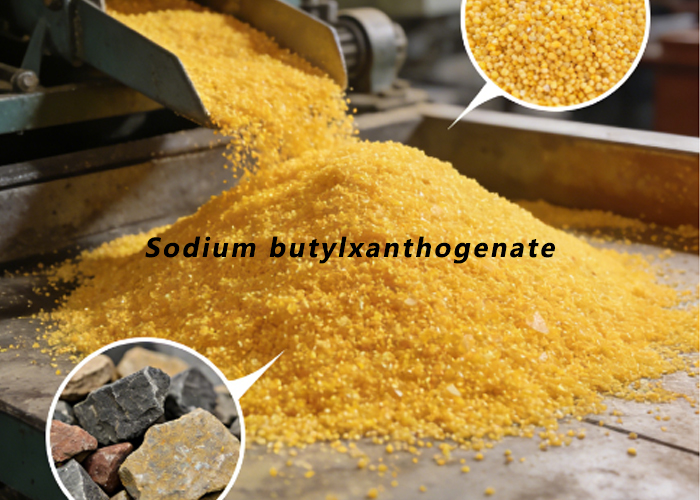
In recent years, with the rapid expansion of global mining activities and continuous optimization of mineral processing technologies, flotation reagents have become increasingly vital. Among them, Sodium Butyl Xanthate has established itself as one of the most widely used collectors in sulfide ore flotation. Known for its excellent selectivity and strong collecting ability, Sodium O-butyl dithiocarbonate plays a key role in improving recovery rates and optimizing beneficiation efficiency across global mining operations.
Current Status of Sodium Butyl Xanthate in the Global Market
As global demand for efficient mineral separation continues to rise, Sodium Butyl Xanthate has seen steady growth in both production and application. Major mining regions across Asia, Africa, South America, and Australia rely heavily on Sodium butylxanthogenate to enhance flotation performance in sulfide ores such as copper, lead, and zinc.
With its cost-effectiveness and adaptability to various ore conditions, Sodium O-butyl dithiocarbonate has become a preferred choice for mining companies seeking higher recovery rates with lower operational costs. Manufacturers have continuously improved product purity and stability, allowing Sodium Butyl Xanthate to meet increasingly strict international standards.
Chemical Properties and pH Influence on Performance
The performance of Sodium Butyl Xanthate is closely related to the pH value of the pulp system, which directly affects its chemical stability and flotation efficiency.
Under weak alkaline conditions (around pH 8–10), Sodium butylxanthogenate exhibits optimal stability and maximum collecting power. This environment allows Sodium O-butyl dithiocarbonate to effectively adsorb onto the surface of sulfide minerals, significantly improving flotation recovery rates.
However, in acidic conditions (pH < 7), Sodium Butyl Xanthate becomes unstable. It tends to decompose into alcohol and carbon disulfide, leading to a sharp decline in flotation performance.
Similarly, under strong alkaline conditions (pH > 13), Sodium butylxanthogenate undergoes hydrolysis, reducing its collecting efficiency and making Sodium O-butyl dithiocarbonate less effective in mineral separation.
Therefore, controlling pulp pH within an optimal range is essential to fully utilize the performance advantages of Sodium Butyl Xanthate in flotation systems.
Technological Advancements and Industry Advantages
Technological innovation has further strengthened the global position of Sodium Butyl Xanthate. Manufacturers are focusing on improving product stability, reducing impurities, and enhancing environmental performance. Advanced production processes ensure that Sodium butylxanthogenate maintains consistent quality, even under complex mining conditions.
In addition, customized formulations of Sodium O-butyl dithiocarbonate are being developed to meet specific ore characteristics. This allows mining companies to achieve better selectivity and efficiency, particularly in challenging flotation environments.
Environmental considerations have also become a key focus. Modern production technologies aim to minimize emissions and improve the biodegradability of Sodium Butyl Xanthate, aligning with global sustainability trends.
Internationalization Trends and Market Expansion
With the globalization of the mining industry, Sodium Butyl Xanthate suppliers are expanding their international presence. Strategic partnerships, overseas warehouses, and localized technical support have enabled Sodium butylxanthogenate to penetrate key markets more effectively.
Participation in international exhibitions and technical exchanges has further enhanced the reputation of Sodium O-butyl dithiocarbonate products. As a result, Sodium Butyl Xanthate is increasingly recognized as a reliable and high-performance flotation reagent worldwide.
Future Challenges and Opportunities
Despite its strong market position, Sodium Butyl Xanthate faces challenges such as stricter environmental regulations and increasing competition from alternative reagents. To remain competitive, manufacturers must continue investing in R&D and sustainable production technologies.
At the same time, growing demand for mineral resources, especially in emerging markets, presents significant opportunities. By improving product performance and expanding global distribution networks, Sodium butylxanthogenate is expected to maintain its leading role in flotation applications.
Conclusion
As one of the most important flotation reagents, Sodium Butyl Xanthate has secured a key position in the global mining industry. Its strong collecting ability, adaptability to different conditions, and cost advantages make Sodium O-butyl dithiocarbonate an essential solution for efficient mineral processing.
With continuous innovation and global market expansion, Sodium butylxanthogenate will continue to drive improvements in flotation efficiency, helping mining enterprises achieve higher recovery rates and sustainable development goals.