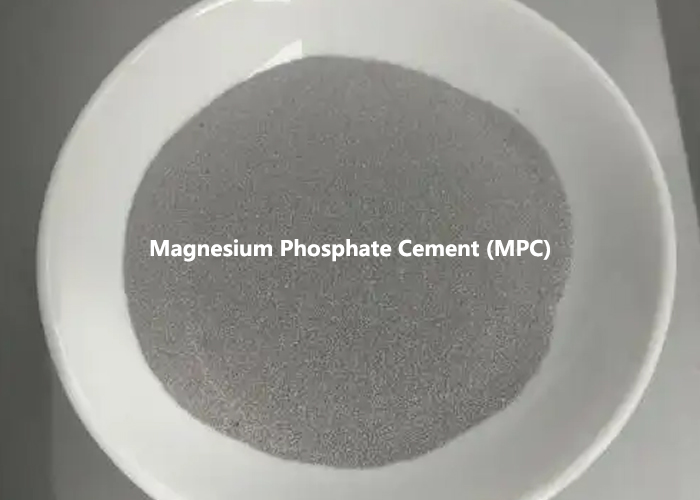
Magnesium Phosphate Cement (MPC): The Fast-Setting Repair Material Solving Critical Concrete Maintenance Challenges
Magnesium Phosphate Cement (MPC) has emerged as one of the most effective rapid repair materials available today. Thanks to its ultra-fast setting speed, high early strength, excellent bonding performance, and outstanding low-temperature adaptability, MPC is becoming the preferred solution for contractors, infrastructure owners, and industrial maintenance teams worldwide.
What is Magnesium Phosphate Cement (MPC)?
Magnesium Phosphate Cement (MPC) is a high-performance inorganic cementitious material produced through the reaction of magnesium oxide and phosphate compounds.
Unlike conventional Portland cement, MPC develops strength through an acid-base reaction, enabling extremely rapid hardening while maintaining excellent long-term durability.
Key Characteristics
✔ Rapid setting and hardening
✔ High early and ultimate strength
✔ Superior adhesion to concrete and steel substrates
✔ Excellent volume stability
✔ Outstanding freeze-thaw resistance
✔ High abrasion resistance
✔ Good thermal resistance
✔ Can cure normally at low temperatures
These properties make MPC ideal for emergency repair applications where speed and reliability are essential.
Why Buyers Are Switching to MPC Repair Mortar
Many procurement managers and engineering contractors face recurring challenges when sourcing repair materials:
Pain Point 1: Long Maintenance Shutdowns
Traditional repair mortars often require 24–72 hours before reopening facilities to traffic.
MPC Solution:
Magnesium Phosphate Cement can achieve high early strength within hours, significantly reducing shutdown times and enabling rapid return to service.
Pain Point 2: Poor Performance in Cold Weather
Concrete repairs in winter or high-altitude regions frequently suffer from slow hydration and delayed strength development.
MPC Solution:
MPC demonstrates excellent low-temperature performance and can harden effectively even at temperatures below -20°C, eliminating the need for expensive heating or special curing procedures.
Pain Point 3: Weak Bonding and Premature Failure
Many repair materials fail due to inadequate bonding with existing concrete structures.
MPC Solution:
The strong adhesive properties of MPC create excellent bonding with both concrete and steel substrates, minimizing the risk of delamination and extending service life.
Main Applications of Magnesium Phosphate Cement
1. Airport Runway Repair
Airports require repair materials that minimize disruption to flight operations.
MPC enables:
Rapid runway crack repair
Joint rehabilitation
Pavement patching
Emergency maintenance projects
Its quick strength gain allows runways to reopen within a much shorter timeframe compared to conventional repair systems.
2. Highway and Bridge Rehabilitation
Heavy traffic infrastructure requires durable repair materials capable of withstanding continuous loading.
MPC is widely used for:
Highway pavement restoration
Bridge deck repair
Expansion joint rehabilitation
Concrete spall repair
3. Low-Temperature Construction Projects
In cold climates, standard cement-based materials often fail to achieve design strength efficiently.
MPC is especially suitable for:
Winter construction
High-altitude regions
Northern infrastructure projects
Cold-storage facilities
4. Precast Repair and Grouting
Due to its excellent flowability and adhesion, MPC can be used for:
Shrinkage crack filling
Surface defect repair
Equipment foundation grouting
Industrial floor restoration
5. Rebar Anchoring Applications
Compared with traditional anchoring materials, MPC offers:
Faster setting
Higher bonding strength
Reduced installation time
Improved project efficiency
6. Industrial Corrosion Protection
MPC can be utilized in industrial environments where concrete structures are exposed to aggressive chemicals and high temperatures.
Applications include:
Petrochemical facilities
Power plants
Steel manufacturing plants
Industrial pipelines
Technical Advantages That Matter to Procurement Teams
When evaluating suppliers, buyers often focus on more than just price.
A reliable MPC supplier should provide:
Stable Product Quality
Consistent raw material sourcing and strict quality control ensure predictable field performance.
Customized Formulations
Different projects require different setting times and strength development profiles.
Global Logistics Support
Timely delivery is critical for emergency repair projects and infrastructure maintenance schedules.
Technical Support
Professional guidance on mixing ratios, curing conditions, and application methods helps contractors achieve optimal performance.
Three Important MPC Keywords Buyers Frequently Search
To help engineers, distributors, and procurement managers find the right solution, here are three high-value industry keywords related to MPC:
1. Magnesium Phosphate Cement
The primary term used for this advanced rapid repair material across global infrastructure markets.
2. Rapid Repair Mortar
A highly searched keyword among contractors seeking fast-track concrete rehabilitation solutions.
3. Fast Setting Concrete Repair Material
A common procurement keyword used for airport, highway, bridge, and industrial maintenance projects requiring minimal downtime.
Why Choose MPC for Critical Repair Projects?
For organizations seeking to reduce downtime, improve repair durability, and maintain project schedules in challenging environments, Magnesium Phosphate Cement (MPC) offers a compelling solution.
Whether repairing airport runways, highways, industrial floors, bridges, or cold-region infrastructure, MPC delivers:
Faster return to service
Lower lifecycle maintenance costs
Superior bonding performance
Reliable cold-weather construction
Long-term structural durability
As infrastructure owners increasingly prioritize efficiency and reliability, Magnesium Phosphate Cement, Rapid Repair Mortar, and Fast Setting Concrete Repair Material technologies are becoming essential tools for modern repair and maintenance projects.