N-Vinyl-2-pyrrolidone (NVP): Applications, Advantages, and Purchasing Guide for Global Chemical Buyers
As demand for high-performance specialty chemicals continues to grow across pharmaceuticals, coatings, adhesives, personal care, and advanced materials industries, N-Vinyl-2-pyrrolidone, also known as 1-Vinylpyrrolidin-2-one or NVP, has become an increasingly important chemical intermediate in global manufacturing.
Due to its excellent reactivity, strong solubility, and outstanding compatibility with multiple polymer systems, N-Vinyl-2-pyrrolidone is widely used in the production of water-soluble polymers, UV coatings, adhesives, lithium battery materials, medical products, and cosmetic formulations.
For many international buyers, however, questions still remain:
What is the difference between N-Vinyl-2-pyrrolidone and traditional vinyl monomers?
Why is 1-Vinylpyrrolidin-2-one widely used in pharmaceutical and industrial formulations?
How can buyers evaluate the quality and stability of NVP products?
Which industries are currently driving demand growth for N-Vinyl-2-pyrrolidone?
This article explains the core properties, application scenarios, and procurement considerations of NVP, helping chemical distributors, manufacturers, and sourcing managers better understand the market.
What Is N-Vinyl-2-pyrrolidone (NVP)?
N-Vinyl-2-pyrrolidone is a high-performance vinyl monomer with excellent polymerization activity and strong polarity. The product is also commonly referred to as:
1-Vinylpyrrolidin-2-one
NVP
Vinyl Pyrrolidone Monomer
Because of its highly active vinyl group and lactam structure, N-Vinyl-2-pyrrolidone can easily copolymerize with acrylic monomers, vinyl acetate, styrene, and many other compounds.
This allows 1-Vinylpyrrolidin-2-one to improve:
Adhesion
Film formation
Hydrophilicity
Flexibility
Chemical stability
Solubility performance
As a result, NVP has become an important raw material in multiple high-value-added industries.
Why Is NVP Widely Used in Industrial Applications?
One of the biggest advantages of N-Vinyl-2-pyrrolidone is its multifunctionality.
Unlike conventional monomers that serve only one purpose, 1-Vinylpyrrolidin-2-one can simultaneously improve polymer performance, enhance compatibility, and optimize processing efficiency.
Key Advantages of N-Vinyl-2-pyrrolidone
High Purity and Stable Quality
High-quality NVP products usually achieve purity above 99.7%, helping manufacturers maintain stable polymerization efficiency and batch consistency.
For pharmaceutical, electronic chemical, and coating applications, stable purity is essential for reducing production risks.
Excellent Compatibility
N-Vinyl-2-pyrrolidone is compatible with many solvents and polymer systems.
This allows 1-Vinylpyrrolidin-2-one to work effectively in:
Water-based coatings
UV curing systems
Pressure-sensitive adhesives
Cosmetic formulations
Ink systems
Battery materials
Its strong compatibility also helps improve formulation flexibility for manufacturers.
Strong Reactivity
Due to its active vinyl structure, NVP participates efficiently in copolymerization reactions.
This makes N-Vinyl-2-pyrrolidone particularly suitable for:
Radiation curing materials
UV coatings
High-performance resin systems
Functional polymer synthesis
Environmental and Regulatory Advantages
Many international buyers are increasingly concerned about REACH compliance, product traceability, and environmental standards.
High-quality 1-Vinylpyrrolidin-2-one suppliers usually provide:
ISO-certified production
Stable export documentation
Consistent global logistics support
These factors are becoming increasingly important for long-term supply chain cooperation.
Industry Applications of N-Vinyl-2-pyrrolidone
Pharmaceutical Industry
Scenario:
Pharmaceutical manufacturers require highly biocompatible raw materials for drug delivery systems and medical formulations.
Problem:
Traditional binders and solvents may have limited solubility or poor compatibility with active pharmaceutical ingredients.
Solution:
N-Vinyl-2-pyrrolidone is widely used in pharmaceutical intermediates and polymer synthesis because of its excellent solubility and biocompatibility.
In many formulations, 1-Vinylpyrrolidin-2-one helps improve:
Drug dispersion
Stability
Film-forming properties
Controlled-release performance
As pharmaceutical manufacturing standards continue to rise globally, demand for high-purity NVP remains stable.
UV Coatings and Adhesives
Scenario:
UV coating manufacturers need faster curing speed and stronger adhesion performance.
Problem:
Conventional resin systems may suffer from slow curing efficiency and insufficient substrate adhesion.
Solution:
By adding N-Vinyl-2-pyrrolidone, manufacturers can improve curing speed and coating flexibility.
Because 1-Vinylpyrrolidin-2-one has strong reactive properties, it helps optimize:
UV curing efficiency
Surface adhesion
Chemical resistance
Film flexibility
Today, NVP is widely used in UV inks, electronic coatings, wood coatings, and industrial adhesive systems.
Personal Care and Cosmetics
Scenario:
Cosmetic brands require stable film-forming agents for hair styling and skincare formulations.
Problem:
Some traditional materials may reduce formulation stability or create poor skin compatibility.
Solution:
N-Vinyl-2-pyrrolidone is commonly used in personal care formulations because of its excellent film-forming ability and formulation compatibility.
In cosmetic applications, 1-Vinylpyrrolidin-2-one helps improve:
Hair fixation
Moisture retention
Formula stability
Product texture
As premium cosmetics and functional skincare products continue to grow globally, NVP demand in this sector is also expanding.
Lithium Battery and Advanced Materials
Scenario:
Battery material manufacturers require functional additives with strong stability and processing performance.
Problem:
Battery systems demand increasingly stable materials under high-energy-density conditions.
Solution:
Certain advanced polymer systems use N-Vinyl-2-pyrrolidone as a functional intermediate to improve processing and material compatibility.
With the rapid expansion of the global lithium battery industry, interest in high-performance specialty chemicals such as 1-Vinylpyrrolidin-2-one continues to increase.
How Should Buyers Choose a Reliable NVP Supplier?
When sourcing NVP, global buyers usually focus on several core factors:
Product Purity
For most industrial applications, purity stability directly affects production consistency.
Many buyers prefer N-Vinyl-2-pyrrolidone with purity levels above 99.5%.
Packaging and Logistics
Because 1-Vinylpyrrolidin-2-one is sensitive to storage conditions, reliable packaging and transportation are essential.
Professional suppliers typically provide:
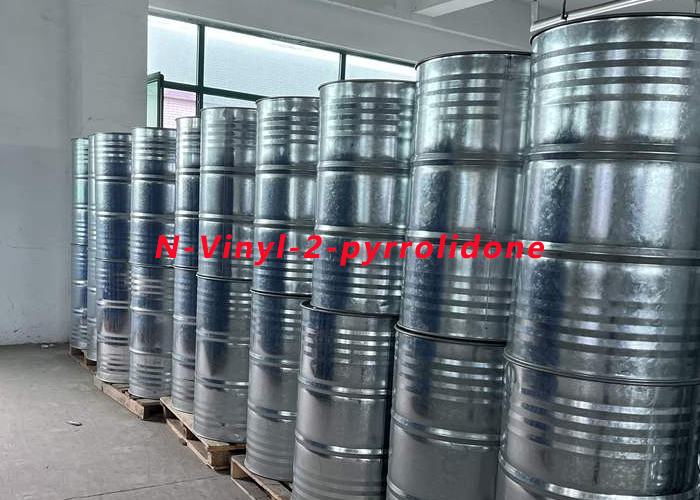
Drum packaging
IBC packaging
Customized export packaging
Temperature-controlled logistics support
Regulatory Support
International buyers often require:
COA
MSDS
TDS
REACH support
ISO certification
A stable supplier of NVP should be able to provide complete export documentation efficiently.
Future Market Trends for N-Vinyl-2-pyrrolidone
As global industries continue moving toward high-performance materials, advanced coatings, medical polymers, and new energy technologies, the market demand for N-Vinyl-2-pyrrolidone is expected to remain strong.
At the same time, buyers are becoming more focused on:
Product consistency
Long-term supply stability
Regulatory compliance
Technical support
Customized solutions
This means the market competition for 1-Vinylpyrrolidin-2-one suppliers is gradually shifting from simple price competition toward quality, technical capability, and supply chain reliability.
For manufacturers and distributors looking for stable specialty chemical materials, NVP remains an important product with broad application potential across multiple industries.