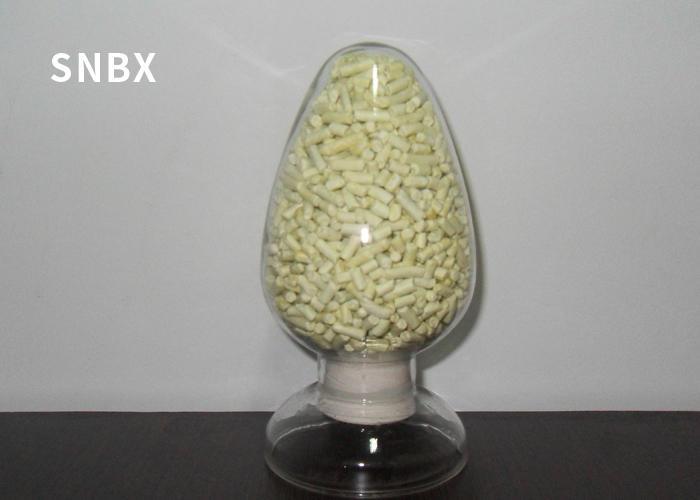
Sodium n-Butyl Xanthate: A Powerful Collector for Sulfide Ore Flotation
In the field of mineral processing, Sodium n-butyl xanthate is widely recognized as one of the most efficient and reliable collectors for the flotation of metal sulfide ores. Also known as Sodium o-butyl carbonodithioate and Dithiocarbonic acid O-butyl S-sodium salt, this reagent plays a critical role in improving flotation recovery and concentrate grade in sulfide mineral beneficiation plants worldwide.
What Is Sodium n-Butyl Xanthate?
Sodium n-butyl xanthate (commonly abbreviated as SBNX) is a strong anionic collector primarily used in the flotation of copper, zinc, lead, and iron sulfide ores. Under its alternative chemical names—Sodium o-butyl carbonodithioate and Dithiocarbonic acid O-butyl S-sodium salt—this compound is known for its highly active dithiocarbonate functional group, which provides exceptional affinity toward sulfide mineral surfaces.
Because of its balanced collecting power and selectivity, Sodium n-butyl xanthate is considered a standard reagent in many mineral processing circuits, particularly where high recovery rates are required without excessive gangue flotation.
Strong Collecting Ability in Sulfide Flotation
The outstanding performance of Sodium n-butyl xanthate lies in its molecular structure. The active dithiocarbonate group in Dithiocarbonic acid O-butyl S-sodium salt chemically adsorbs onto the surface of sulfide minerals, forming hydrophobic metal-xanthate complexes. This adsorption mechanism allows Sodium o-butyl carbonodithioate to selectively render target minerals water-repellent, enabling their attachment to air bubbles during flotation.
In practical applications, Sodium n-butyl xanthate demonstrates particularly strong collecting power for:
Copper sulfide ores (such as chalcopyrite)
Sphalerite (zinc sulfide)
Pyrite (iron sulfide)
By enhancing the hydrophobicity of these minerals, Sodium n-butyl xanthate significantly improves flotation kinetics and overall recovery performance.
Improved Slurry Stability and Particle Dispersion
Beyond its primary collecting function, Sodium o-butyl carbonodithioate contributes to improved slurry stability. The adsorption of Dithiocarbonic acid O-butyl S-sodium salt on mineral surfaces helps maintain better dispersion of fine particles, reducing unwanted aggregation and improving flotation selectivity.
This characteristic is particularly valuable in complex polymetallic ore systems, where fine particle recovery is often a challenge. With optimized dosage, Sodium n-butyl xanthate can achieve a balance between strong collection and controlled selectivity, minimizing the flotation of unwanted gangue minerals.
Wide Application in Copper, Zinc, and Pyrite Flotation
In industrial mineral processing plants, Sodium n-butyl xanthate is widely used in:
Copper sulfide flotation circuits
Zinc sulfide (sphalerite) separation
Pyrite recovery processes
Whether operating in bulk flotation or differential flotation systems, Sodium o-butyl carbonodithioate offers flexible application potential. By adjusting pulp pH, reagent dosage, and conditioning time, metallurgists can optimize the performance of Dithiocarbonic acid O-butyl S-sodium salt for different ore characteristics.
For copper sulfide ores, Sodium n-butyl xanthate provides high recovery with stable concentrate grade. In zinc circuits, Sodium o-butyl carbonodithioate can effectively enhance sphalerite activation and flotation response. During pyrite recovery, Dithiocarbonic acid O-butyl S-sodium salt delivers consistent collection efficiency, contributing to improved metal yield.
Operational Safety and Environmental Considerations
While Sodium n-butyl xanthate is highly effective, its handling must strictly follow industrial safety standards. As with all xanthate-based reagents, Sodium o-butyl carbonodithioate should be stored in dry, well-ventilated environments and protected from moisture and high temperatures.
Proper dosing control of Dithiocarbonic acid O-butyl S-sodium salt is essential not only for flotation efficiency but also for minimizing reagent consumption and reducing environmental impact. Modern mineral processing operations increasingly focus on reagent optimization to achieve both economic and sustainable outcomes.
Why Choose High-Quality Sodium n-Butyl Xanthate?
High-purity Sodium n-butyl xanthate ensures consistent performance in flotation circuits. Reliable manufacturing standards for Sodium o-butyl carbonodithioate guarantee stable chemical composition, controlled moisture content, and strong collecting power.
For mineral processing engineers, plant operators, and mining students, understanding the performance characteristics of Dithiocarbonic acid O-butyl S-sodium salt is essential. Its strong adsorption capacity, selectivity toward sulfide minerals, and adaptability across flotation systems make Sodium n-butyl xanthate an indispensable reagent in modern ore beneficiation.
By selecting premium-grade Sodium n-butyl xanthate, mineral processing plants can achieve:
Higher recovery rates
Improved concentrate quality
Optimized reagent consumption
Stable and efficient flotation performance
As global demand for copper, zinc, and other base metals continues to grow, Sodium o-butyl carbonodithioate and Dithiocarbonic acid O-butyl S-sodium salt remain core flotation reagents supporting efficient and sustainable mineral resource development.