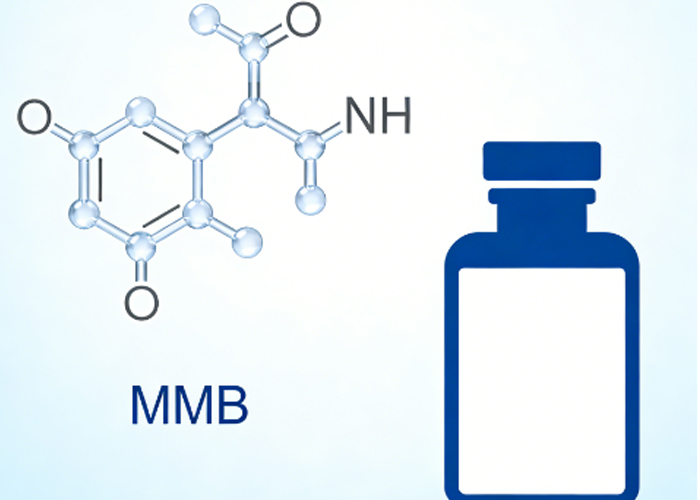
3-Methoxy-3-Methyl-1-Butanol (MMB) | Premium Odor Carrier for Fragrance & Fine Fragrance Products
In the fragrance industry, product quality depends not only on scent composition, but also on how effectively fragrance materials dissolve, stabilize, and release aroma over time. 3-Methoxy-3-Methyl-1-Butanol (MMB) is increasingly recognized as a high-performance solvent and odor carrier widely used in cosmetic fragrance, home fragrance, and personal care aromatics.
This article introduces the key performance advantages of MMB in aroma and fragrance applications, and why it is an ideal ingredient for formulators seeking stability, compatibility, and efficient scent delivery.
1) MMB in the Fragrance Industry: A Versatile Odor Carrier
MMB (3-Methoxy-3-Methyl-1-Butanol) is a colorless, oil- and water-compatible liquid with a mild, gentle odor profile. One of its most valuable characteristics in fragrance systems is that it evaporates slowly, helping fragrances maintain a smoother and longer-lasting scent experience.
Because MMB is fully miscible with water, it can integrate seamlessly into aqueous fragrance formulations. Meanwhile, it is also compatible with many organic solvents, making it effective for a broad range of fragrance and aroma product structures—whether water-based, alcohol-based, or mixed-solvent systems.
2) MMB’s Superior Properties for Everyday Fragrance Formulation
✅ (1) Slow Evaporation for Stable, Long-Lasting Scent
MMB is known for its slow volatilization rate, which supports consistent fragrance release during product use. In fragrance applications, this helps reduce the “top-note disappearing too quickly” issue and improves the overall odor profile stability.
✅ (2) Strong Compatibility with Water and Organic Solvents
MMB can dissolve well in water and oils/organic media thanks to its molecular structure. This enables formulators to create more uniform fragrance systems, improving clarity, homogeneity, and long-term stability.
✅ (3) Surface-Active Assistant: Reduce Surfactant Dosage
MMB works as a surface-active system assistant. In practical formulation development, it can help reduce the amount of surfactant additives, enabling cost optimization while still maintaining performance.
✅ (4) Freezing-Resistance Capability Like Glycols
MMB also provides freeze-prevention performance, supporting stable fragrance products even in cooler environments. This makes it particularly attractive for seasonal fragrance use and for products stored or shipped under variable temperature conditions.
✅ (5) High Stability to Acidification (Peroxides)
In fragrance systems where oxidative stability matters, MMB shows strong stability against acidification (peroxide-related oxidative environments). Compared with many alternative ingredients, MMB does not accelerate oxidative acidification when mixed with other components, which helps reduce related irritation or sensitization risks—resulting in a safer, low-risk formulation strategy.
✅ (6) Evaporation Rate Less Sensitive to Humidity
MMB’s evaporation behavior is not easily affected by humidity, enabling more predictable performance in real-world conditions. By contrast, some similar carriers may be significantly humidity-sensitive.
In addition, fragrance engineers can further adjust fragrance release speed by tuning MMB concentration.
3) Additional Performance Advantages of MMB (Beyond Basic Compatibility)
MMB is not only valuable for fragrance solubility—it also supports multiple formulation-level performance needs.
✅ (1) Outstanding Solubility Due to Two-Phased Affinity
MMB contains both hydroxyl (-OH) and methoxy (-OCH₃) groups. These functional groups enable strong hydrogen bonding both within the molecule and between molecules. The result is amphiphilic behavior:
It dissolves in water (polar solvents)
It also dissolves in oil (non-polar solvents)
A key benefit is that the MMB/water system shows no phase separation between 0°C and the boiling point, supporting stability in aqueous fragrance formulations.
✅ (2) Suitable Viscosity & Optimal Water Ratio Behavior
MMB/water can form clustered structures due to hydrogen-bond interactions. This produces a moderate viscosity effect, rather than being too thin or overly thick.
In practice, the highest viscosity occurs around an MMB/water ratio of 80/20, giving formulators a useful reference point to design texture and flow properties.
✅ (3) Low Toxicity & Safer Handling Profile
In toxicology-related assessments, MMB has demonstrated high safety performance across many test areas, supporting its adoption in fragrance-adjacent applications where product safety is critical.
✅ (4) Biodegradability for Environmental Responsibility
MMB is biodegradable, meaning it can be handled through microbial treatment in wastewater treatment processes. This is aligned with growing sustainability expectations across the chemical and fragrance supply chain.
✅ (5) Low Flammability & High Safety
MMB has a flash point of 68°C (154°F), which indicates relatively high fire safety compared with more volatile solvents.
Notably, the flash point can disappear with increased water content, adding another practical safety advantage in aqueous formulations.
✅ (6) Mild Odor for a Cleaner Final Fragrance Profile
MMB’s odor character is mild, meaning it can function as a fragrance carrier without overpowering the intended scent notes. This helps preserve the intended fragrance composition—from top notes to base notes.
✅ (7) No Ozone Depletion Potential
MMB can be photodegraded in air, so it does not contribute to ozone layer depletion. This makes it compatible with environmentally responsible ingredient selection goals.
✅ (8) No Residue After Volatilization
After evaporation, MMB generally leaves minimal residue, helping avoid unwanted deposits that can affect product appearance, performance, or long-term user experience.
4) Best-Fit Applications of MMB in Fragrance Systems
Because of its strong solubility, slow-release behavior, and stable compatibility, 3-Methoxy-3-Methyl-1-Butanol (MMB) is widely used in:
Personal care fragrances (body sprays, hair care scent systems, deodorant-type formulations)
Home fragrance products (room sprays, air freshener scent carriers)
Fine fragrance intermediates and solvent-assisted blending systems
Aqueous fragrance formulations requiring full miscibility with water
Mixed-solvent scent systems needing stability and predictable evaporation behavior