Lithium Hydroxide: Key Differences Between Battery-Grade and Industrial-Grade Products
As the global new energy industry continues to expand, the demand for high-quality Lithium Hydroxide is rapidly increasing. From EV battery manufacturing to glass ceramics and lubricants, different industries require different purity standards and production specifications.
Understanding the differences between Battery-grade lithium hydroxide and Industrial-grade lithium hydroxide is essential for buyers looking to improve production efficiency, ensure product stability, and control procurement costs.
What Is Lithium Hydroxide?
Lithium Hydroxide is an important inorganic compound widely used in lithium-ion batteries, lubricating grease, ceramics, pharmaceuticals, and specialty chemicals.
With the rapid growth of electric vehicles and energy storage systems, Battery-grade lithium hydroxide has become one of the key raw materials for high-nickel cathode materials such as NCM and NCA batteries. Meanwhile, Industrial-grade lithium hydroxide remains widely used in traditional industrial manufacturing sectors due to its cost-effectiveness and reliable chemical performance.
1. Purity and Impurity Control
The most significant difference between Battery-grade lithium hydroxide and Industrial-grade lithium hydroxide is purity level and impurity control.
Battery-Grade Lithium Hydroxide
Purity usually ≥99.5%
Extremely strict impurity limits
Total impurities generally ≤50 ppm
Critical metal impurities such as Fe, Cu, Mg, Ca, and Na are tightly controlled
High-purity Battery-grade lithium hydroxide directly affects battery energy density, cycle life, charging efficiency, and safety performance. Even trace impurities can negatively impact cathode material stability during battery production.
Industrial-Grade Lithium Hydroxide
Purity generally ≥98.5%
Total impurities usually ≤200 ppm
More flexible impurity tolerance
Suitable for conventional industrial processing
Compared with Battery-grade lithium hydroxide, Industrial-grade lithium hydroxide focuses more on stable chemical properties and economic value rather than ultra-low impurity specifications.
2. Production Process Differences
The manufacturing process for Battery-grade lithium hydroxide is far more complex than that of Industrial-grade lithium hydroxide.
Battery-Grade Lithium Hydroxide Production
The production of Battery-grade lithium hydroxide requires:
Deep purification technology
Multi-stage impurity removal
Precise crystallization systems
Advanced lithium extraction methods such as membrane separation or adsorption purification
Strict quality inspection procedures
These processes require high technical expertise, advanced equipment investment, and stable production management systems.
Industrial-Grade Lithium Hydroxide Production
The production process for Industrial-grade lithium hydroxide is relatively mature and simpler, including:
Basic purification
Lithium precipitation
Standard crystallization
Conventional drying and packaging
Because the process is less complicated, Industrial-grade lithium hydroxide usually offers better cost advantages for large-scale industrial consumption.
3. Physical Properties and Product Appearance
Battery-Grade Lithium Hydroxide
Battery-grade lithium hydroxide is typically:
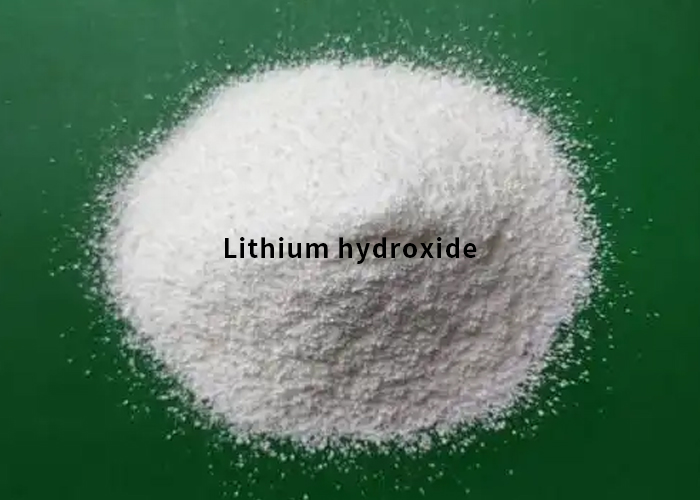
White powder or crystal
Uniform particle size (usually 10–50 μm)
Excellent flowability
Low agglomeration
Suitable for cathode mixing and sintering processes
Uniform particle distribution is extremely important for lithium battery material consistency.
Industrial-Grade Lithium Hydroxide
Industrial-grade lithium hydroxide may appear as:
Powder or block form
Slight agglomeration allowed
Particle size range usually 10–100 μm
Less strict physical requirements
For traditional industries, physical consistency requirements are lower compared with Battery-grade lithium hydroxide applications.
4. Application Scenarios
Battery-Grade Lithium Hydroxide Applications
Battery-grade lithium hydroxide is mainly used in:
Electric vehicle batteries
Energy storage systems
High-end consumer electronics
High-nickel cathode materials
Renewable energy technologies
As the global EV market expands, demand for Battery-grade lithium hydroxide continues to rise rapidly.
Industrial-Grade Lithium Hydroxide Applications
Industrial-grade lithium hydroxide is widely used in:
Glass and ceramics
Lubricating grease
Pharmaceutical intermediates
Metallurgical additives
Chemical synthesis
For these industries, Industrial-grade lithium hydroxide provides stable performance with more competitive procurement costs.
How to Choose the Right Lithium Hydroxide Supplier
When sourcing Lithium Hydroxide, international buyers should evaluate suppliers based on:
Product purity consistency
Stable production capacity
Technical support capability
Export experience
Packaging and logistics solutions
Quality certifications
Customized specifications
Reliable suppliers of Battery-grade lithium hydroxide should offer strict quality control systems and detailed COA reports, while suppliers of Industrial-grade lithium hydroxide should focus on stable supply and cost optimization.
Why High-Quality Lithium Hydroxide Matters
Choosing the right Lithium Hydroxide can significantly improve manufacturing efficiency and final product quality.
For battery manufacturers, premium Battery-grade lithium hydroxide helps enhance:
Battery cycle performance
Thermal stability
Energy density
Production consistency
For industrial manufacturers, reliable Industrial-grade lithium hydroxide helps reduce:
Production costs
Material waste
Operational instability
Conclusion
Both Battery-grade lithium hydroxide and Industrial-grade lithium hydroxide play important roles across modern industries, but they serve completely different market demands.
Battery-grade lithium hydroxide is characterized by ultra-high purity, strict impurity control, and advanced manufacturing technology, making it ideal for the fast-growing new energy sector.
In contrast, Industrial-grade lithium hydroxide offers balanced purity, mature processing technology, and cost advantages for traditional industrial applications.
As global demand for Lithium Hydroxide continues to increase, selecting the right product grade and a reliable supplier will become increasingly important for long-term business success.