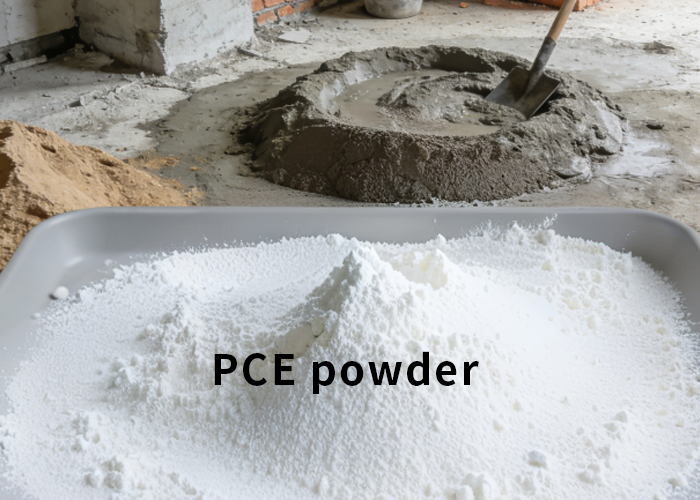
Polycarboxylate Superplasticizer Powder (PCE Powder) in India: A Practical Case Study for High-Performance Concrete
As India accelerates the development of its infrastructure network, the demand for reliable, cost-effective, and high-performance construction materials continues to grow. Highways, metro systems, bridges, and large-scale residential projects all require concrete that not only meets strength specifications but also performs consistently under demanding environmental and logistical conditions.
Among the various concrete admixtures available today, Polycarboxylate Superplasticizer Powder (PCE powder) has emerged as a widely adopted solution. Known for its ability to significantly reduce water content while enhancing workability and durability, PCE powder is increasingly specified in modern concrete mix designs across India.
This article presents a detailed case study of PCE powder in action on an Indian infrastructure project, along with an overview of its key advantages, typical applications, and why it has become a preferred choice for contractors, ready-mix suppliers, and project engineers.
What Is Polycarboxylate Superplasticizer Powder?
Polycarboxylate Superplasticizer Powder is a high-range water-reducing admixture for cement-based materials. Derived from polycarboxylate ether polymers, it is engineered to efficiently disperse cement particles, improving concrete fluidity without increasing water content.
Compared to traditional superplasticizers—such as naphthalene-based or lignosulfonate-based products—PCE powder offers:
Higher water reduction capability
Better slump retention
Improved compatibility with various cement types
Greater flexibility in mix design
Its powder form also provides significant advantages in transportation, storage, and handling, particularly in regions where liquid admixtures may face logistical constraints.
Key Advantages of PCE Powder in the Indian Construction Market
1. High Water Reduction for Stronger Concrete
PCE powder reduces water content by 25% to 40%. A lower water-cement ratio directly contributes to:
Higher compressive strength
Reduced porosity
Improved long-term durability
For Indian infrastructure projects that frequently specify M40, M50, or higher-grade concrete, this benefit is especially valuable.
2. Improved Workability and Pumpability
Indian construction sites often involve:
Dense reinforcement layouts
Complex structural geometries
High-rise pumping requirements
PCE powder enhances concrete flowability, allowing it to:
Fill molds more easily
Flow through congested reinforcement
Be pumped efficiently over long vertical and horizontal distances
This reduces the need for excessive vibration and minimizes the risk of honeycombing.
3. Reliable Slump Retention
In many Indian projects, concrete must be transported over long distances from batching plants to job sites, often under high ambient temperatures. PCE powder helps maintain slump for up to 2 hours, depending on mix design and conditions, ensuring:
Consistent workability at the point of placement
Reduced need for on-site water addition
Improved quality control
4. Compatibility with Local Materials
India’s cement market includes a wide range of materials, such as:
Ordinary Portland Cement (OPC)
Portland Pozzolana Cement (PPC)
Portland Slag Cement (PSC)
PCE powder is formulated to work effectively with these cement types, as well as with supplementary cementitious materials like fly ash and slag, making it suitable for diverse regional conditions.
5. Environmental and Cost Benefits
By reducing water and cement consumption, PCE powder contributes to:
Lower CO₂ emissions
Reduced material usage
Improved resource efficiency
For contractors, this often translates into:
Lower overall material costs
A better performance-to-cost ratio
Easier compliance with green building standards
Case Study: PCE Powder in an Indian Infrastructure Project
Project Overview
A large-scale infrastructure project in India required the construction of reinforced concrete structures designed for long-term durability and high load-bearing capacity. The scope included foundations, columns, beams, and slabs—typical of major civil engineering works in the region.
The project team encountered several common challenges associated with large-scale construction in India.
Project Challenges
| Challenge | Details |
|---|---|
| High-Strength Concrete | Required concrete grades above M40, with strict criteria for both early strength and long-term durability. |
| Complex Placement Conditions | Structures included congested reinforcement zones, deep sections, and areas with difficult access, demanding excellent flowability and stability. |
| High Ambient Temperatures | Elevated site temperatures posed risks of rapid slump loss, faster setting times, and increased cracking potential. |
| Tight Construction Timeline | The schedule required faster formwork turnover, early strength development, and minimal delays in concrete placement. |
Solution: PCE Powder in Concrete Mix Design
To address these challenges, the project team selected Polycarboxylate Superplasticizer Powder as the primary admixture.
Why PCE Powder Was Chosen:
Easier transportation and storage compared to liquid admixtures
Stable performance under varying site conditions
Flexibility to adjust dosage based on specific requirements
PCE powder was incorporated into the concrete mix during batching, with careful dosage optimization to achieve the right balance between workability and strength.
Implementation Process
Laboratory Testing
Initial trials determined the optimal dosage and confirmed compatibility with locally available cement and aggregates.Mix Design Optimization
The mix was adjusted to reduce water content while maintaining required slump levels.On-Site Monitoring
Concrete performance was closely monitored during transportation, placement, and curing to ensure consistency.
Results and Observations
| Parameter | Outcome |
|---|---|
| Improved Workability | Smooth flow during placement, better filling of complex sections, and reduced need for mechanical vibration, improving construction efficiency and reducing labor intensity. |
| Enhanced Strength & Durability | Lower water-cement ratio enabled higher early strength (faster formwork removal), improved long-term compressive strength, and better resistance to moisture and temperature variations. |
| Consistent Slump Retention | Concrete maintained workability throughout transportation and placement, even in warm conditions, minimizing the need for corrective measures on-site. |
| Reduced Material Waste | Optimized mix designs led to lower cement consumption, reduced rework due to defects, and better overall material efficiency. |
| Cost Efficiency | Despite being a high-performance admixture, PCE powder contributed to lower total construction costs, improved productivity, and fewer delays. |
Practical Applications of PCE Powder in India
Based on field experience, PCE powder is commonly used in:
Ready-mix concrete plants
Precast concrete production
High-rise building construction
Infrastructure projects (bridges, highways, etc.)
Mass concrete applications
Its versatility allows it to be adapted to a wide range of project requirements.
How to Choose the Right PCE Powder Supplier
For contractors and buyers, selecting a reliable supplier is critical. Key factors to consider include:
Consistent product quality
Technical support for mix design
Ability to provide customized formulations
Stable and reliable supply chain
Working with an experienced supplier helps ensure better performance and reduces project risks.
Frequently Asked Questions (FAQ)
Q1: Is PCE powder suitable for high-temperature environments?
Yes. With proper mix design, PCE powder performs well in hot climates and helps maintain workability.
Q2: Can it be used with all types of cement?
PCE powder is generally compatible with most cement types used in India, but testing is recommended to achieve optimal results.
Q3: How is it different from traditional superplasticizers?
PCE powder offers higher water reduction, better slump retention, and greater flexibility in mix design compared to traditional options.
Q4: Is it environmentally friendly?
By reducing cement usage and improving material efficiency, PCE powder supports more sustainable construction practices.
Conclusion
Polycarboxylate Superplasticizer Powder has become an important material in India’s construction industry, delivering improved concrete performance while supporting cost and environmental objectives.
The case study presented here demonstrates how PCE powder effectively addresses common construction challenges—from high-strength requirements and complex placement conditions to demanding project timelines.
As infrastructure development continues across India, advanced admixtures like PCE powder will play an increasingly vital role. For contractors, engineers, and material buyers, adopting such solutions can lead to more efficient, reliable, and sustainable construction outcomes.
Contact Us
If you are looking for a stable supply of Polycarboxylate Superplasticizer Powder, along with technical support and customized solutions, please feel free to reach out.
We can provide:
Product samples
Technical data sheets (TDS)
Mix design recommendations
Project-based consultation
Let us support your next construction project with practical and reliable material solutions.