Why Magnesium Phosphate Repair Mortar Is Becoming the Preferred Solution for Rapid Concrete Repair
In modern infrastructure maintenance, repair speed, bonding strength, and low-temperature performance are critical factors for contractors and material procurement teams. Compared with traditional cement-based systems, magnesium phosphate repair mortar offers significantly faster strength development and superior durability, making it an ideal choice for emergency pavement repair, airport maintenance, bridge rehabilitation, and industrial flooring applications.
For international buyers looking for rapid hardening concrete repair material, high-performance MPC systems are increasingly becoming the preferred option for projects requiring fast reopening and long-term stability.
What Is Magnesium Phosphate Repair Mortar?
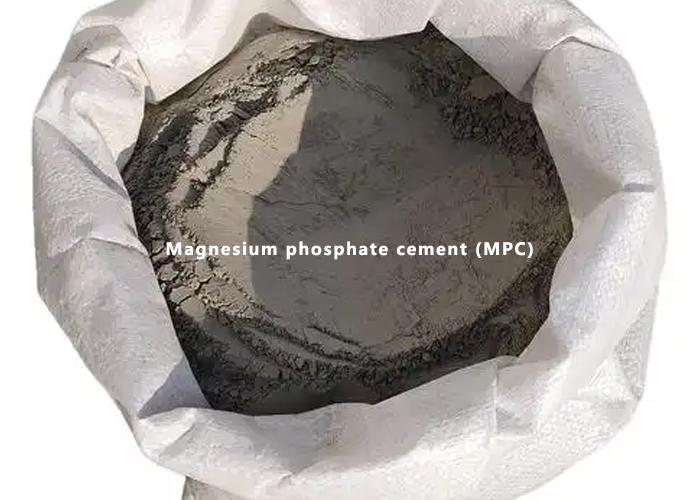
Magnesium phosphate repair mortar is a high-performance cementitious repair material based on magnesium phosphate cement (MPC) technology. Unlike ordinary Portland cement systems, magnesium phosphate repair mortar reacts rapidly and develops ultra-high early strength, even under low-temperature conditions.
Because of its fast-setting characteristics and excellent durability, rapid hardening concrete repair material based on MPC technology is widely used in:
Highway emergency repair
Airport runway maintenance
Bridge deck rehabilitation
Industrial floor restoration
Parking garage repair
Cold-region infrastructure repair
Ultra-Fast Strength Development for Rapid Reopening
One of the biggest advantages of magnesium phosphate repair mortar is its exceptional early strength performance.
Typical compressive strength results:
2 hours: ≥20 MPa
1 day: ≥40 MPa
7 days: ≥80 MPa
This makes rapid hardening concrete repair material ideal for projects where downtime must be minimized.
Road surfaces repaired with magnesium phosphate repair mortar can often reopen to traffic within 0.5–3 hours, significantly reducing traffic disruption and labor costs.
For airport runways, logistics centers, and municipal road systems, using rapid hardening concrete repair material can dramatically improve operational efficiency.
Excellent Bonding Strength to Existing Concrete
High bonding performance is another major advantage of magnesium phosphate repair mortar.
Testing with C40 concrete shows:
Tensile bond strength after 3 days exceeds 2.5 MPa
Pull-off failure consistently occurs in the substrate concrete rather than at the repair interface
This demonstrates that magnesium phosphate repair mortar forms an extremely strong bond with old concrete structures.
Compared with traditional repair systems, rapid hardening concrete repair material based on MPC technology greatly reduces the risk of delamination and edge cracking.
Superior Cold Weather Repair Performance
For infrastructure projects in cold climates, MPC mortar cold weather repair performance is one of the most important procurement considerations.
Traditional cement repair systems often require insulation curing and extended setting time under low temperatures. In contrast, magnesium phosphate repair mortar can achieve design strength without thermal curing even at temperatures between -20°C and -10°C.
This outstanding MPC mortar cold weather repair capability has already been verified in road maintenance projects in Qinghai and Inner Mongolia in China.
Because of its stable hydration reaction under freezing conditions, rapid hardening concrete repair material based on MPC technology is especially suitable for:
Northern region highway repair
Winter bridge rehabilitation
Cold storage floor repair
Airport pavement maintenance in freezing climates
Outstanding Wear Resistance for Heavy Traffic Areas
Compared with ordinary Portland cement concrete, magnesium phosphate repair mortar provides approximately twice the wear resistance.
Wear rate comparison:
MPC system: 1.95 kg/m²
Ordinary Portland cement concrete: 3.0–3.5 kg/m²
This superior durability makes rapid hardening concrete repair material highly suitable for:
Airport aprons
Container yards
Parking garages
Heavy-duty industrial floors
Logistics warehouses
For high-frequency traffic surfaces, magnesium phosphate repair mortar significantly extends maintenance cycles and reduces long-term repair costs.
Nearly Zero Shrinkage Prevents Cracking
Shrinkage cracking is a common issue in conventional repair systems. However, magnesium phosphate repair mortar features extremely low drying shrinkage.
Typical drying shrinkage:
<0.05%
This near-zero shrinkage performance helps prevent:
Edge cracking
Joint separation
Long-term delamination
As a result, rapid hardening concrete repair material based on MPC technology offers longer repair service life and improved structural stability.
Chloride-Free Formula for Reinforced Concrete Safety
Unlike some fast-setting repair systems, magnesium phosphate repair mortar contains no chloride ions.
This makes it safe for:
Reinforced concrete structures
Prestressed concrete systems
Steel-containing infrastructure
Using chloride-free rapid hardening concrete repair material helps avoid accelerated steel corrosion and improves long-term durability.
Why Global Buyers Choose MPC Mortar Cold Weather Repair Solutions
For international construction chemical buyers, selecting the right MPC mortar cold weather repair supplier is critical.
Professional suppliers should provide:
Stable production capacity
Consistent early-strength performance
Verified low-temperature testing data
Export experience for construction chemicals
Technical support for application optimization
High-quality magnesium phosphate repair mortar suppliers can also customize setting time and strength development according to different project environments.
Inquiry Support for Magnesium Phosphate Repair Mortar
If you are sourcing:
magnesium phosphate repair mortar
rapid hardening concrete repair material
MPC mortar cold weather repair solutions
please provide:
Application scenario
Ambient temperature range
Required reopening time
Repair thickness
Estimated project volume
Our technical team can recommend the most suitable magnesium phosphate repair mortar formulation for your project and support stable long-term supply for infrastructure repair applications.