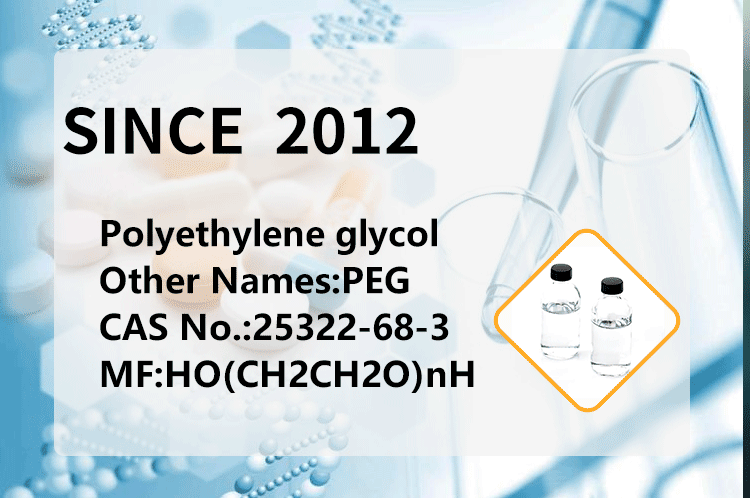
Polyethylene glycol
- EASTCHEM
- China
- 15~20 days
- 25322-68-3
PEG has good water solubility and can be dissolved in a variety of solvents. It can disperse drugs and prevent aggregation, so it can be used as a solid dispersant for drugs, such as laxatives (PEG4000 powder).
Product introduction
Polyethylene glycol (PEG), is a polymer formed by the addition of ethylene oxide and ethylene glycol. Depending on molecular weight, it ranges from clear liquid to solid, offering versatile performance across industries.
We supply high-purity polyethylene glycol with strict compliance to USP / EP standards, making it ideal for pharmaceutical, cosmetic, and industrial applications.
Key Advantages of Our polyethylene oxide (PEG)
✔ High purity & low impurities (EO, dioxane strictly controlled)
✔ Compliant with USP & EP pharmaceutical standards
✔ Excellent water solubility, lubricity, and biocompatibility
✔ Stable molecular weight distribution
✔ Suitable for drug delivery, excipients, and formulations
polyethylene oxide specification
Test items | Analyticalmethods | Standard | Result |
Appearance(25℃) | Current EP | Clear,viscous,colourless oralmost colourless,hyg | Conforms |
Identification | Current EP | A | Conforms |
Current EP | B | Conforms | |
Current EP | C | Conforms | |
Appearance of solution | Current EP | Meet requirements | Conforms |
Completeness and Color ofSolution | Current USP | Meet requirements | Conforms |
Acidity or alkalinity | Current EP | Meet requirements | Conforms |
pH(5% in water) | Current USP | 4.5~7.5 | 6.1 |
Average Molecular Weight | Current USP | 380~420 | 419 |
Viscosity(20℃,m Pa·S) | Current EP | 105~130 | 124 |
Viscosity(98.9℃,cst) | Current USP | 6.8~8.0 | 7.6 |
Hydroxyl value | Current EP | 264~300 | 268 |
Reducing substance | Current EP | Meet requirements | Conforms |
Ethylene Glycol andDiethylene Glycol(%) | Current USP | ≤0.25 | 0.05 |
Ethylene Glycol andDiethylene Glycol(%) | Current EP | ≤0.4 | 0.05 |
Formaldehyde(ppm) | Current EP | ≤15 | Conforms |
Ethylene oxide(ppm) | Current EP | ≤1 | <0.04 |
Dioxan(ppm) | Current EP | ≤10 | < 2 . 5 9 |
Free Ethylene Oxide(μg/g) | Current USP | ≤10 | <0.04 |
1,4-Dioxane(μg/g) | Current USP | ≤10 | < 2 . 5 9 |
Water(%) | Current EP | ≤2.0 | 0.05 |
Sulfated ash(%) | Current EP | ≤0.2 | ≤0.2 |
Residue on Ignition(%) | Current USP | ≤0.1 | ≤0.1 |
Heavy Metals(ppm) | Current USP | ≤5 | Conforms |
Grade | Pharmaceutical grade | ||
Conclusion | According to Current EP、Current USP standard,the results meet therequirements. | ||
Product application
Because polyethylene glycol has excellent water solubility, lubricity and moisturizing properties, it is widely used in medicine, chemical industry, food, cosmetics and other fields. In the field of medicine, polyethylene glycol can be used as a drug carrier, sustained release agent and protective agent.
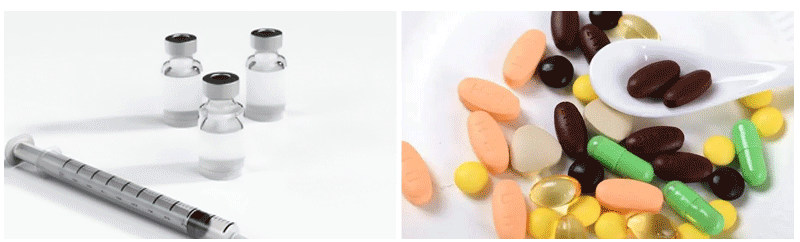
Injection solution: Aqueous solutions of PEG200-600 with different concentrations are good solvents, which can improve the solubility of difficult-to- tolerate drugs and stabilize water-labile drugs.
Tablet molding: PEG4000/6000 is a commonly used water-based adhesive and lubricant, which can adjust the hardness and brittleness of tablets to make them comply with national regulations. It can also improve the solubility of the main drug in the stomach and improve bioavailability.
Tablet film coating: PEG400 can be used as a plasticizer for tablet film coatings/to improve the toughness and flatness of the film coating, and as a pore-forming agent/to improve the release rate of the drug.
Drug synthesis: Modifying drugs or drug carriers by using PEG is currently an ideal method for sustained drug release and improving the pharmacokinetics and toxicity of drugs.
Drug stabilizer: Adding PEG to liquid protein drugs can increase protein stability through the interaction between PEG and the hydrophobic segment of the protein. High-concentration PEG is often used as a cryoprotectant and precipitation/crystallization agent for proteins.
Drug carrier: PEG300 and PEG1500 mixed in equal amounts have a certain paste-like consistency and can be used as the water-soluble base of the ointment. There are many suppositories using polyethylene glycol as base, such as aspirin suppositories, chlorhexidine suppositories, chlorhexidine iodine suppositories, etc.
Drug solid dispersion material: PEG has good water solubility and can be dissolved in a variety of solvents. It can disperse drugs and prevent aggregation, so it can be used as a solid dispersant for drugs, such as laxatives (PEG4000 powder).
Other medical applications: applications in medical equipment, fluorescent dyes in bioengineering
Polyethylene oxide Packaging & Storage
The chemical properties of polyethylene glycol are stable in the air and in solution, but those with a molecular weight below 2000 are easily hygroscopic. Not suitable for microbial growth and not prone to rancidity.
Polyethylene glycoland its aqueous solution can be sterilized by autoclaving, filtration or gamma rays. If solid state is sterilized by dry heat at 150°C for 1 hour, oxidation may be induced and degradation may occur.
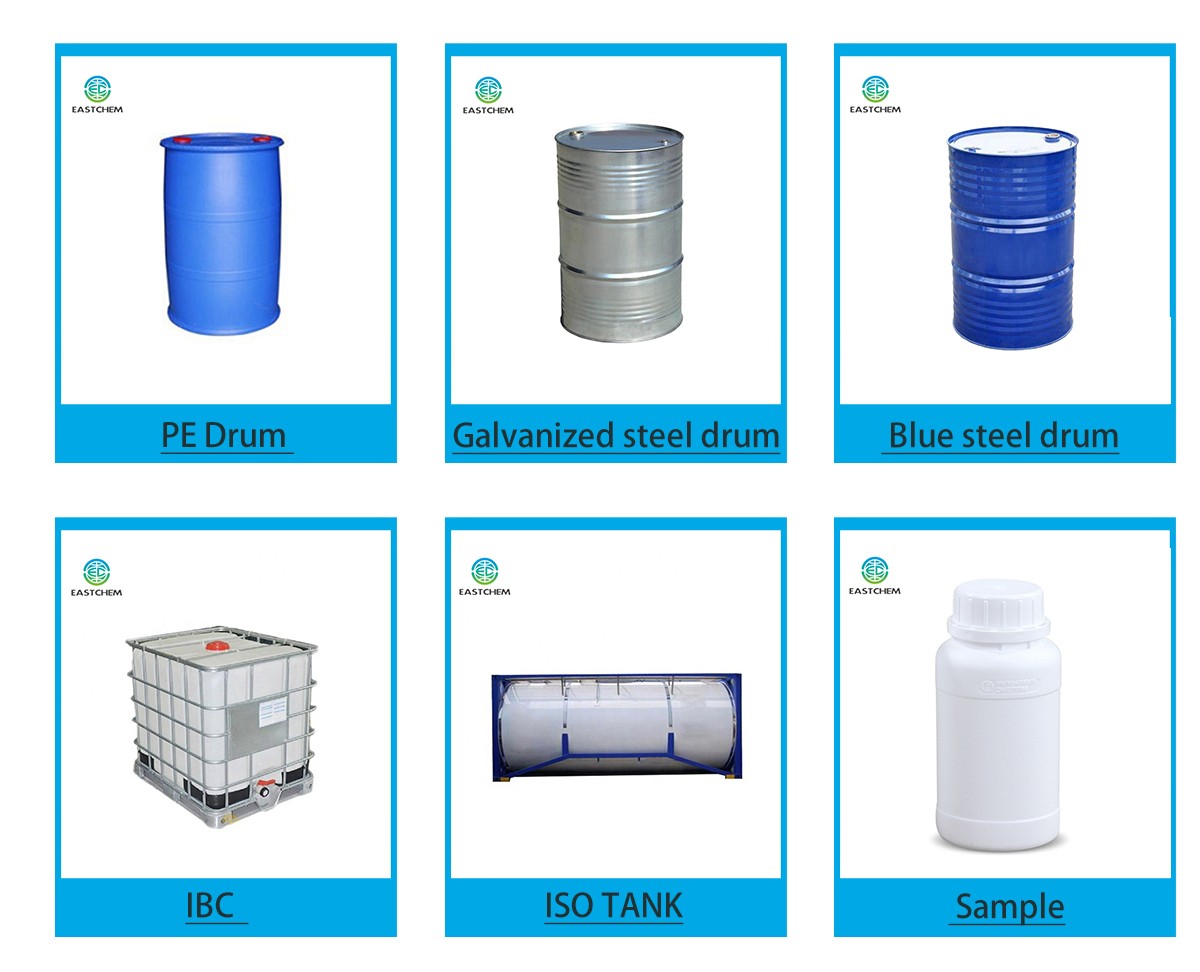
It should be kept in a cool, dry place and stored in an airtight container. Liquid grade polyethylene glycol can be stored in stainless steel, aluminum, or glass containers.
FAQ
Q1: Can I get free samples?
Yes, we provide free samples of polyethylene glycol (PEG).
Q2: How do you ensure product quality?
Free samples for testing
COA / TDS provided
Production strictly follows USP / EP standards
Q3: Do you offer discounts?
Yes, pricing depends on order quantity.
Q4: Can you customize PEG specifications?
Yes, we offer customized polyethylene glycol (PEG / PEO) based on your requirements.